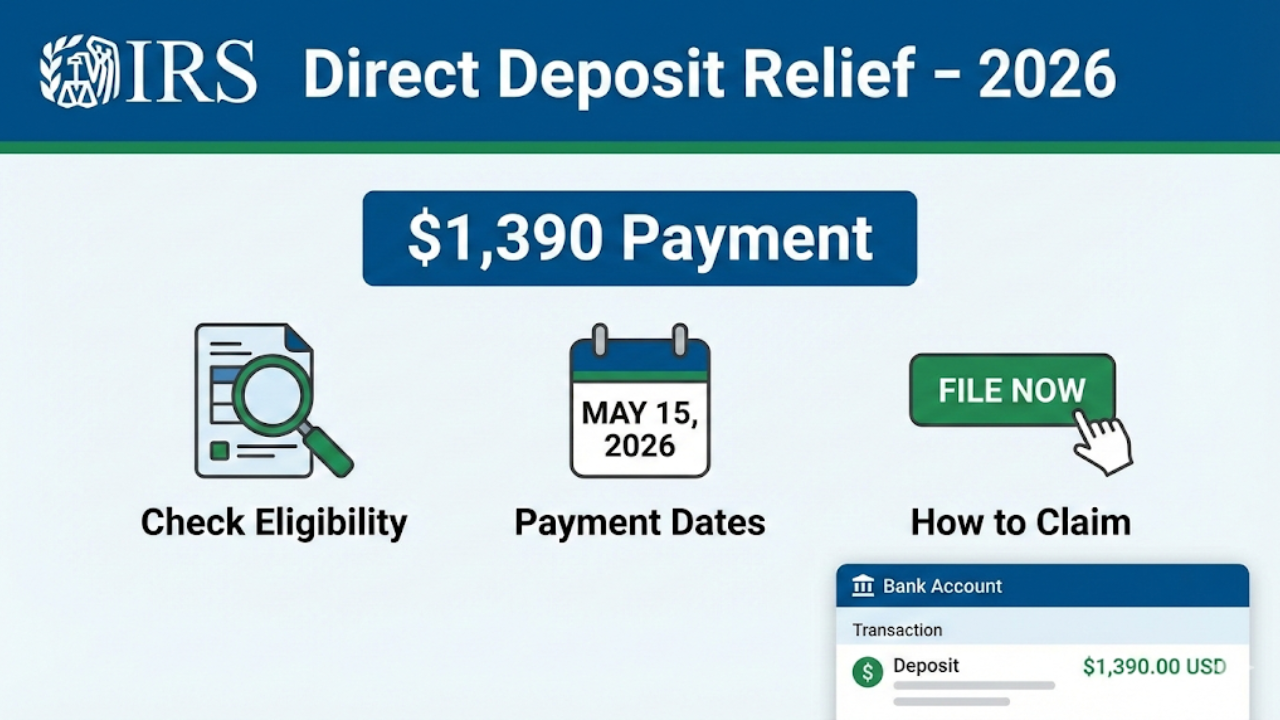

Rumors of a $1,390 IRS direct deposit relief payment in 2026 have sparked widespread excitement among American taxpayers grappling with rising costs. Social media and various websites buzz with claims of quick cash relief hitting bank accounts soon. While the idea sounds promising, sorting fact from fiction requires a closer look at official channels and past patterns.
Origins of the Buzz
The $1,390 figure seems to stem from online speculation tied to economic policy talks under President Trump’s administration. Discussions around tariff revenues or economic stimulus have fueled these stories, but no legislation has passed to make this a reality. Families hoping for automatic deposits often confuse these rumors with legitimate tax refunds that arrive during peak filing season.
No Official IRS Confirmation
As of February 2026, the IRS website and press releases show zero announcements about a $1,390 relief program. The agency always posts detailed guidelines, eligibility rules, and timelines on IRS.gov for any new payments, just like during the COVID-19 stimulus rounds. Without such updates, these claims remain unverified hype designed to drive clicks.
Why Confusion Arises Now
February marks the height of tax season, when early filers start seeing refunds via direct deposit. Larger refunds from credits like the Earned Income Tax Credit or Child Tax Credit can mimic special relief payments. Scammers exploit this timing, sending fake alerts urging people to “claim” funds by sharing personal data, which leads to identity theft.
Potential Eligibility Factors
If a real program emerges, eligibility might mirror past relief efforts. Low-to-moderate income households, those with dependents, or recent tax filers could qualify. Income thresholds often cap at around $75,000 for singles or $150,000 for joint filers, based on adjusted gross income from the prior year.
| Eligibility Criteria | Single Filers | Joint Filers | Key Requirements |
|---|---|---|---|
| Income Limit | Under $75,000 | Under $150,000 | 2025 AGI from tax return |
| Dependents | 1+ qualifying children | Same | Under age 17, SSN required |
| Filing Status | Must file 2025 return | Must file 2025 return | Direct deposit on file |
| Exclusions | Non-residents | High earners | Felony non-compliance |
This table outlines hypothetical criteria drawn from historical IRS patterns, not a confirmed 2026 plan.
Rumored Payment Dates
Speculative posts point to mid-February through March 2026 for deposits, aligning with early refund cycles. True stimulus payments typically roll out in waves over weeks, prioritizing direct deposit users. Paper checks follow for others, but delays are common without bank details on file.
How to Claim or Prepare
Taxpayers can’t “claim” a non-existent payment, but preparing for real refunds is smart. Update direct deposit info via your latest tax return or IRS online account. File accurately using free tools like IRS Free File if eligible, and watch for the “Where’s My Refund?” tracker. Avoid clicking suspicious links promising instant relief.
Staying Safe from Scams
Viral posts often link to phishing sites mimicking IRS portals. The real IRS never demands payment or info via email, text, or social media for relief. Report scams to IRS.gov or the FTC, and double-check news against official sources. Financial peace comes from vigilance, not chasing rumors.
In summary, hold off on expectations for $1,390 checks until the IRS speaks. Focus on solid tax filing to unlock any legitimate refunds heading your way.
FAQs
Is the $1,390 payment real?
No official confirmation exists as of February 2026; it’s mostly online speculation.
Who might qualify if approved?
Likely low-income filers with dependents, similar to past programs.
When could payments arrive?
Rumors say February-March, but only tax refunds are scheduled now.
Disclaimer
The content is intended for informational purposes only. You can check the official sources; our aim is to provide accurate information to all users.
