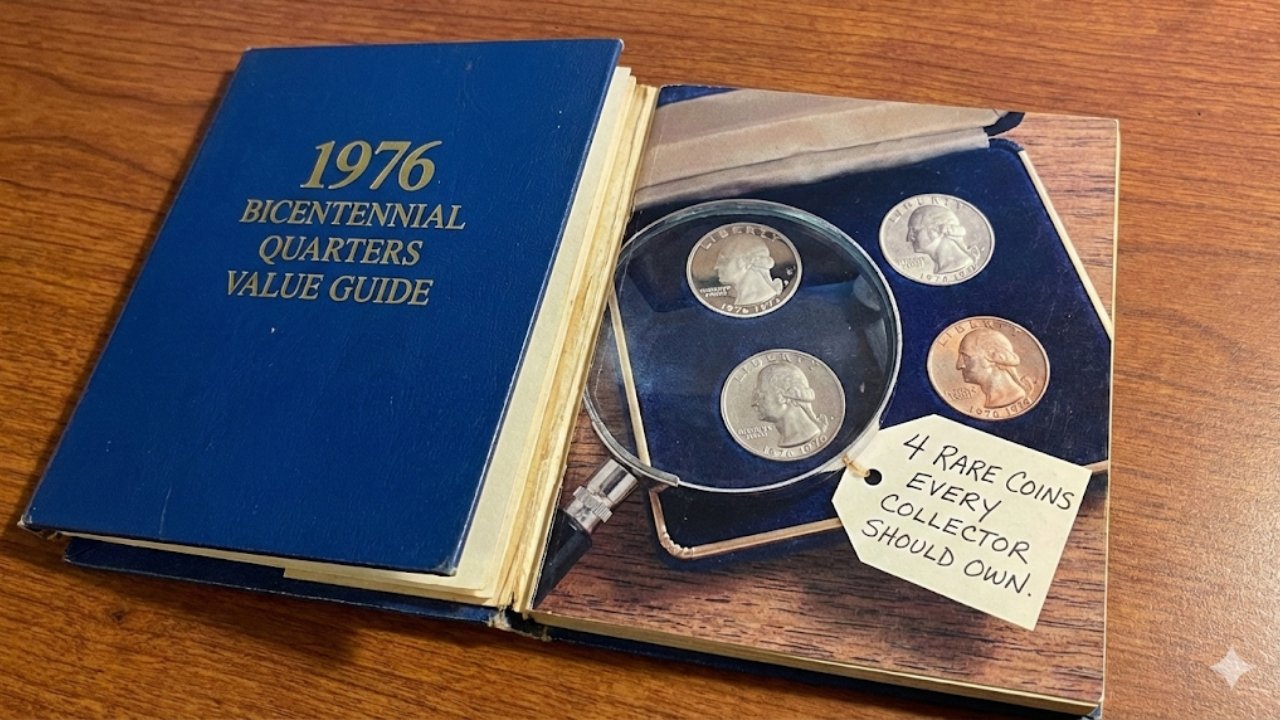

The 1976 Bicentennial quarters mark America’s 200th birthday with a special design that swapped the usual eagle for a drummer boy and victory torch on the reverse. Minted mainly in 1975 and dated 1776-1976, these coins entered everyday change, making billions available today. Yet among the masses, four standout rarities hold serious appeal for collectors chasing high values.
Historical Background
Congress approved the Bicentennial coin program in 1974 to celebrate the nation’s founding. The U.S. Mint produced these quarters at Philadelphia, Denver, and San Francisco facilities, hitting record numbers to meet demand. Philadelphia struck over 809 million clad pieces, Denver about 860 million, and San Francisco added 11 million silver versions for collectors.
Clad coins used copper-nickel over pure copper blanks, while silver ones packed 40% silver for premium sets. Proof versions from San Francisco offered mirror finishes, drawing hobbyists right away. This flood into pockets sparked lifelong collecting habits, as many stashed rolls from grandparent change jars.
Common vs. Rare Varieties
Most 1976 quarters fetch just face value in worn shape, maybe a dollar or two if crisp. High-grade clad examples from Denver or Philly climb to $5-$10 uncirculated. Silver proofs start around $15 but soar with perfection.
True gems hide in errors or top grades. Double-die strikes show ghostly doubled letters, off-center hits shift designs, and wrong-planchet mishaps use dime blanks. Silver business strikes from San Francisco prove scarcest, with mintages under 12 million total.
| Variety | Mintage | Value Range (Circulated to MS69) | Key Feature |
|---|---|---|---|
| 1976-P Clad | 809M+ | $0.25 – $4,500 | Common circulation strike |
| 1976-D Clad MS68 | High | $1,000 – $6,000 | Superb gem condition |
| 1976-S Silver MS69 | 11M | $10 – $19,200 | 40% silver business strike |
| 1976-D Double Die Obverse | Low error rate | $500 – $8,400 | Doubled lettering error |
| 1976 Quarter on Dime Planchet | Extremely rare | $5,000 – $12,000+ | Wrong metal strike |
Rare Coin #1: 1976-S Silver MS69
San Francisco’s silver business strikes stand out for their 40% silver core, absent from regular change. A pristine MS69 graded by NGC fetched $19,200 at auction, thanks to flawless surfaces and subtle toning. Only a handful reach this level, making them top prizes.
These coins skipped proofs, going straight to collector sets. Sharp drummer details and crisp “S” marks boost appeal. Spot one in estate lots or old albums, and professional grading could unlock five-figure payouts.
Rare Coin #2: 1976-D MS68 Clad
Denver minted superior strikes that aged well, but MS68 gems number just six known. One sold for $1,740 in 2022, with full luster and no bag marks. Condition rarity drives prices past $6,000 in top sales.
Examine for bold motifs and original brilliance under light. Full Steps on the reverse—clear lines on the drummer’s base—add premiums. These outperform Philly siblings due to mint quality.
Rare Coin #3: Double Die Obverse Errors
The FS-101 double die on 1976-D shows doubled “Liberty” and stars, fetching $8,400 in MS66. Obvious doubling separates it from minor shifts. Even MS65 versions hit $500 easily.
Mint misalignment caused these during high-speed production. Check obverse rim under magnification for fuzzy edges. Varieties like these turn pocket change into portfolio pieces.
Rare Coin #4: Struck on Dime Planchet
A 1976 quarter blanked on a smaller dime planchet sold for $12,000 in proof-67 state. The undersized, bi-metallic oddity screams error value. Off-metal strikes like this rarely surface.
Weigh yours—standard quarters hit 5.67 grams; errors weigh less. Dramatic size mismatch and exposed copper core confirm authenticity after grading. Hunt bank rolls for these anomalies.
Collecting Tips
Store in albums away from air to preserve luster. Use cotton gloves for handling. Submit suspects to PCGS or NGC for verification—slabs boost resale. Track auctions on Heritage for market shifts.
Join clubs like the American Numismatic Association for insider deals. Focus on original packaging for proofs to maximize returns. Patience pays as values climb with silver prices and nostalgia.
FAQs
What makes a 1976 quarter silver?
Only San Francisco 40% silver issues for collector sets; clad ones stayed in circulation.
How do I spot double die errors?
Look for doubled letters like “Liberty” or stars on the obverse under 10x loupe.
Are Bicentennial quarters still common?
Billions minted, but top grades and errors remain scarce.
Disclaimer
The content is intended for informational purposes only. Check official sources; our aim is to provide accurate information to all users.
