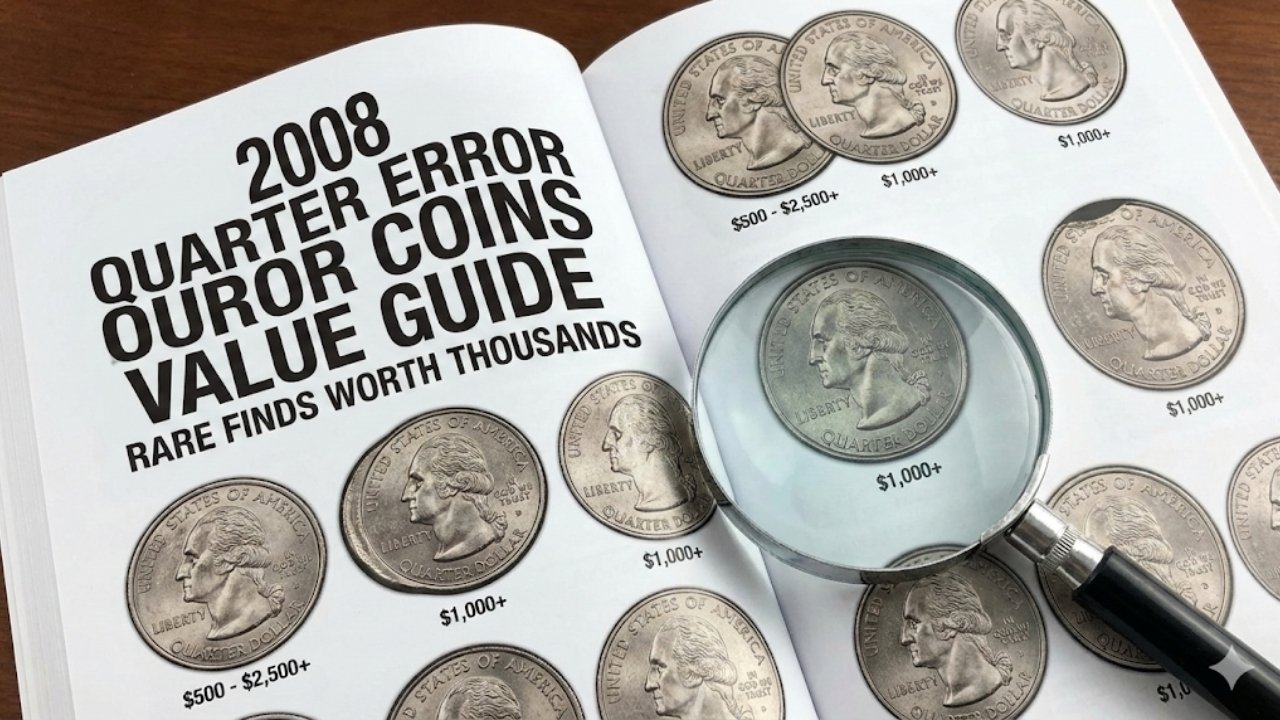

The 2008 quarters mark the end of the popular 50 State Quarters program, featuring designs from states like Oklahoma, New Mexico, Arizona, and Alaska. While most circulate as everyday change worth just 25 cents, certain minting mistakes turn them into hidden treasures. These error coins capture the imagination of collectors, often fetching thousands at auction due to their scarcity and striking flaws.
Common Error Types
Minters produce errors when machines misalign, strike improperly, or use the wrong materials. Off-center strikes shift the entire design, sometimes leaving blank margins or missing elements entirely. Doubled die errors create ghostly duplicates in lettering or motifs, like doubled wings on Oklahoma’s scissortail flycatcher. Clipped planchets show curved bites taken from the edge, while wrong planchet strikes happen when a quarter blank lands on dime or nickel metal by mistake.
Factors Driving Value
Condition reigns supreme in numismatics; uncirculated coins with sharp details outshine worn pocket change. Rarity plays a huge role too—dramatic errors from low-mintage runs command premiums. Professional grading from PCGS or NGC adds credibility, boosting prices by certifying authenticity. Market trends in 2026 show steady demand, especially for bold varieties, as collectors hunt change jars and estate lots for sleepers.
Key 2008 Error Value Table
| State | Error Type | Grade Range | Estimated Value (2026) |
|---|---|---|---|
| Oklahoma | Doubled Die | MS64-MS66 | $125–$520 |
| New Mexico | Off-Center (20%) | MS63-MS65 | $150–$600 |
| Arizona | Die Crack/Cud | MS62-MS64 | $25–$200 |
| Hawaii | Clipped Planchet | MS63-MS64 | $50–$605 |
| Alaska | Wrong Planchet | MS65+ | $1,000–$3,000 |
Off-Center and Strike Errors
Imagine a quarter where George Washington’s portrait tilts wildly off-kilter, exposing raw metal on one side. Off-center strikes from 5% to 50% misalignment fetch $50 to $400, with extremes hitting $1,000 if they retain full horns or dates. New Mexico examples often show Zia sun symbols partially erased, drawing bids from state-quarter enthusiasts. These flaws happened during high-speed coining at Philadelphia or Denver mints.
Die Varieties and Planchet Flaws
Doubled dies on Oklahoma quarters duplicate the native stone drum or bird, valued at $100–$500 in gem condition. Clipped planchets from Hawaii reveal smooth, crescent-shaped cuts, worth $30–$300 depending on the clip size. Rarer wrong planchet errors, like a quarter design on soft dime stock, push values over $1,000 because they defy standard production. Die cracks add bumpy cuds, especially on Arizona’s saguaro cacti, appealing to variety hunters.
Auction Highlights and Tips
Record sales include a 2008-D Oklahoma doubled die at $520 and Hawaii clipped at $605, both PCGS-graded. In 2026, pristine wrong planchet pieces from Alaska have topped $2,500 at Heritage Auctions. To spot your own, check edges for clips, dates for doubling, and alignment under magnification. Always authenticate high-stakes finds—fakes abound. Start with pocket change, then scour bank rolls for these modern rarities.
Building a Collection
Focus on one state or error type to grow your set affordably. Store coins in albums away from air and fingers to preserve luster. Join forums like CoinTalk or NGC registries for trading tips and updates. As values climb with collector interest, 2008 errors offer entry-level excitement without six-figure budgets. Patience pays; many start with $50 finds that appreciate yearly.
FAQs
What causes quarter mint errors?
Misaligned dies, wrong blanks, or machine glitches during striking.
How do I grade my 2008 error quarter?
Use a loupe for details; submit to PCGS/NGC for slabs.
Are all 2008 quarters valuable?
No, only errors; common ones stay at face value.
Disclaimer
The content is intended for informational purposes only. Check official sources; our aim is to provide accurate information to all users.
