
Australia values road safety for everyone, including older drivers who contribute greatly to communities. While there’s no nationwide ban on driving past 70, each state and territory sets specific licensing rules focused on medical fitness and assessments. These measures help ensure seniors remain safe behind the wheel without losing independence.
National Overview
The federal Office of Road Safety outlines guidelines, but implementation varies by jurisdiction. Most areas require medical checks starting around age 75 to screen for issues like vision loss or cognitive decline common in older age. Drivers must self-report health changes everywhere, with penalties for non-disclosure. This approach balances mobility with public protection.
State and Territory Rules
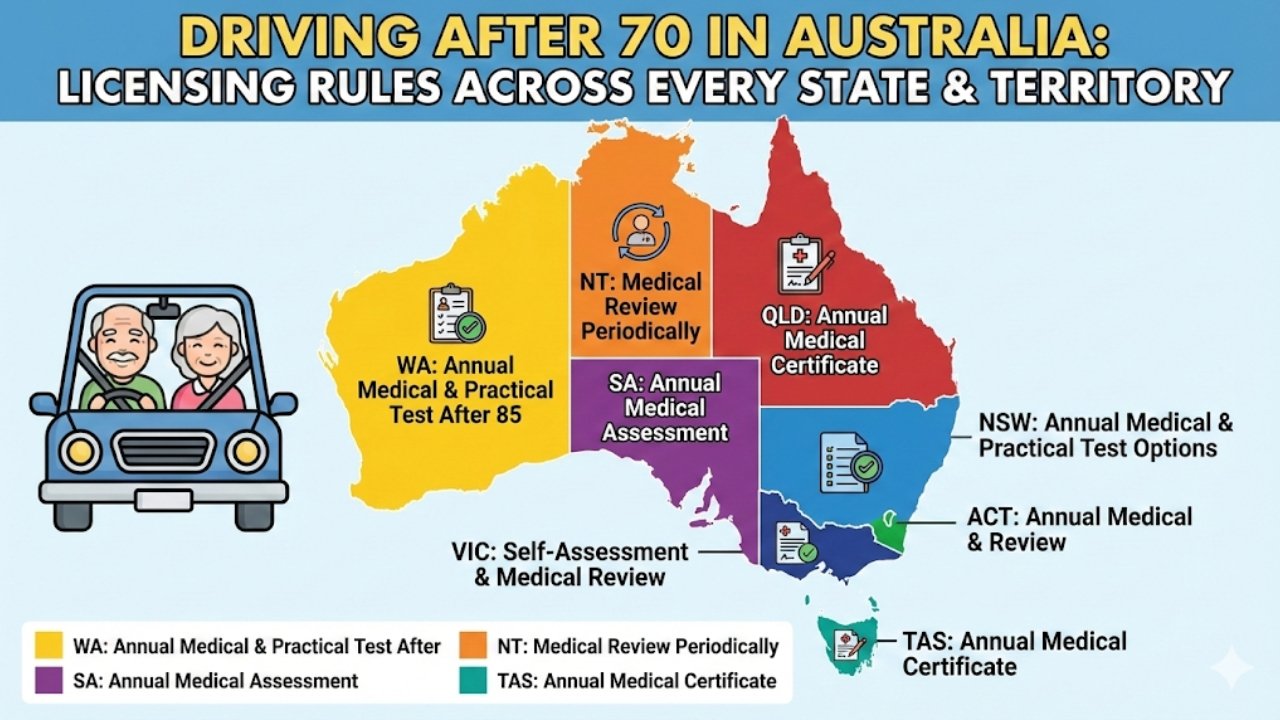
Rules differ significantly across Australia. New South Wales mandates annual medical exams from 75, escalating to practical tests at 85. Queensland requires drivers over 75 to carry a medical certificate while driving, facing fines up to $161 if not. Victoria skips mandatory tests but shortens renewals to three years post-75.
Key Requirements Table
Here’s a summary of medical assessment starts for car licences (C-class) in each area:
| State/Territory | Medical Assessment Age | Notes |
|---|---|---|
| NSW | 75+ annual | Practical test 85+ |
| Victoria | None mandatory | Renewal every 3 years 75+ |
| Queensland | 75+ annual, carry cert | Fines for no cert |
| South Australia | 75+ self-assessment | Medical if conditions |
| Western Australia | 80+ annual | Doctor may require test |
| Tasmania | None mandatory | Report conditions |
| Northern Territory | None | Vision every 5 years |
| ACT | 75+ annual | Public vehicles 70+ |
New South Wales Details
In NSW, turning 75 triggers yearly doctor visits confirming fitness to drive. At 85, biennial on-road assessments become standard unless opting for modified licences limiting drives to daylight or local areas. These changes aim to adapt to potential slower reactions.
Victoria and Queensland Specifics
Victoria relies on self-reporting without routine tests, trusting doctors to flag risks during renewals. Queensland’s strict carry-rule reinforces compliance, with transport departments reviewing reported conditions promptly. Both prioritize accessibility while monitoring health.
Other Territories Insights
South Australia uses self-assessments from 75 for cars, but non-car licences need exams from 70. Western Australia delays checks to 80, adding tests only if advised. Tasmania and NT impose no age-specific mandates, focusing on condition disclosures and periodic vision screens. ACT mirrors NSW/QLD from 75.
Preparing for Renewal
Seniors should schedule check-ups early, gather eyesight reports, and consult GPs familiar with transport forms. Many states offer online portals for renewals, easing the process. Staying proactive maintains driving privileges longer.
FAQs
Do all states require tests after 70?
No, only medical checks in most from 75; Victoria and Tasmania have none.
What if I have a medical condition?
Report it everywhere; it may trigger reviews or restrictions.
Can I get a modified licence?
Yes, in NSW and others for 85+, like local-only driving.
Disclaimer
The content is intended for informational purposes only. You can check the official sources; our aim is to provide accurate information to all users.
