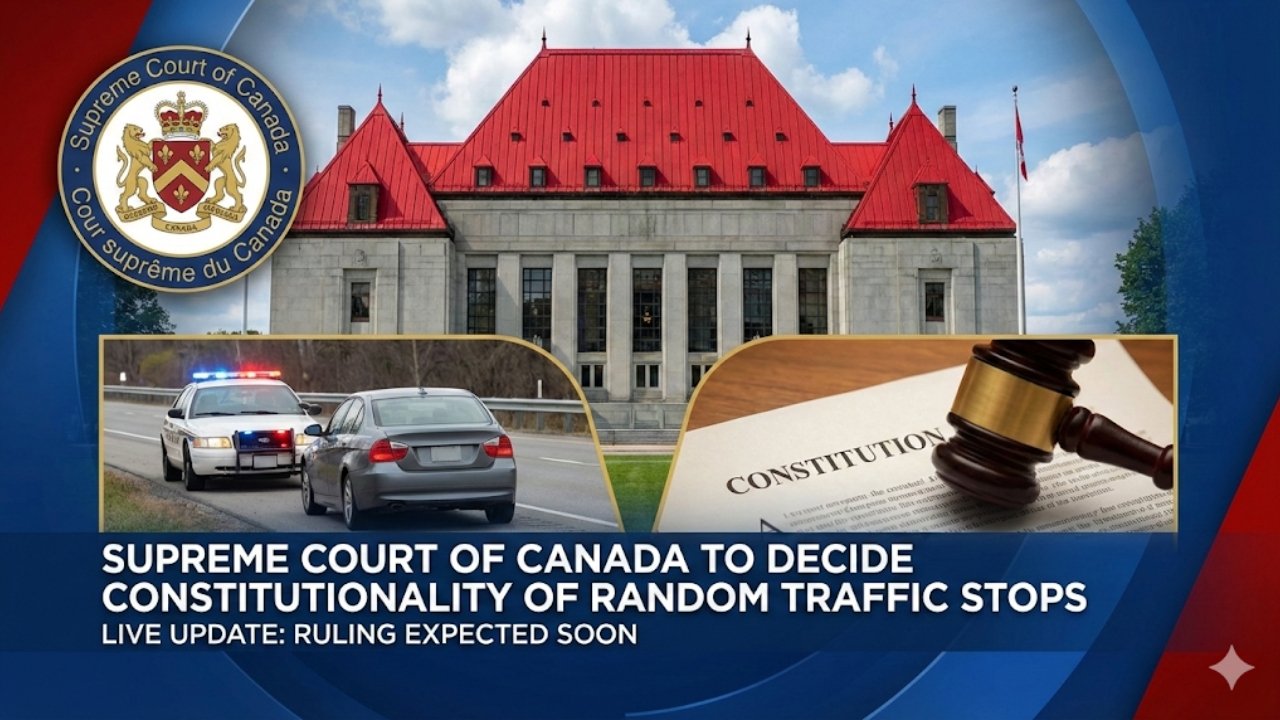

Canada’s Supreme Court is gearing up for a landmark hearing on whether police can legally pull over drivers without any suspicion of wrongdoing. This case challenges long-standing practices that have sparked heated debates over public safety and individual rights. At its core, the dispute questions if random stops align with the Charter of Rights and Freedoms.
Background of the Case
The issue stems from a Quebec driver’s encounter with police in 2018. Joseph Luamba was stopped randomly while driving, leading to a search that uncovered drugs. He challenged the stop as unconstitutional, arguing it violated his rights against arbitrary detention. Quebec’s Court of Appeal sided with him in 2022, striking down a key provincial law and overturning a 1990 Supreme Court precedent from R. v. Ladouceur. That earlier ruling had greenlit random stops as essential for road checks like license verification and sobriety tests.
Quebec’s Pushback on the Ruling
Provincial lawyers argue that scrapping random stops would cripple enforcement efforts. They highlight how these checks catch unlicensed drivers, faulty vehicles, and impaired motorists daily. Without them, roads could become more dangerous, they claim, as targeted policing alone falls short. Police associations across Canada echo this, calling the practice a vital tool in their arsenal.
Challenges Over Racial Profiling
Opponents, including Luamba’s legal team and civil liberties groups, paint a different picture. They contend stops aren’t truly random but target racialized communities, especially Black drivers. Statistics from Quebec show Black motorists face stops at rates far higher than their population share. Advocates say this breeds distrust and systemic bias, infringing on equality rights under the Charter’s Section 15.
Key Legal Arguments at Stake
| Aspect | Pro-Random Stops | Against Random Stops |
|---|---|---|
| Charter Section 9 | Arbitrary but minimally invasive for safety | Violates protection from arbitrary detention |
| Road Safety Impact | Detects 20% of impaired drivers via stops | Bias undermines trust, not proven effective |
| Precedent | R. v. Ladouceur (1990) upheld practice | Outdated; new evidence shows profiling |
| Racial Data | No intent proven | Black drivers stopped 3-5x more often |
Hearings and Broader Implications
Hearings kicked off in January 2026 in Montreal, drawing national attention. Lawyers for the Canadian Civil Liberties Association urged reinstating limits on police discretion to curb abuse. The nine justices must now balance enforcement needs against rights protections. A ruling could reshape policing nationwide, potentially invalidating similar laws elsewhere.
Potential Outcomes and Public Reaction
If the Court upholds the Quebec decision, provinces might need new laws for structured check-stops only. This could reduce profiling but strain resources. Conversely, reaffirming Ladouceur would maintain the status quo, though with calls for better oversight. Public opinion splits along lines of safety concerns versus equity demands, fueling protests and op-eds.
Looking Ahead to the Verdict
The decision, expected later in 2026, will set a precedent for decades. It forces Canada to confront how modern policing intersects with constitutional guarantees. Whatever the outcome, it promises reforms to make traffic enforcement fairer and more accountable.
FAQs
-
When did hearings begin? January 2026 in Montreal.
-
What 1990 case is challenged? R. v. Ladouceur.
-
Does this affect all provinces? Likely, as Charter rights apply nationwide.
Disclaimer
The content is intended for informational purposes only. Check official sources; our aim is to provide accurate information to all users.
