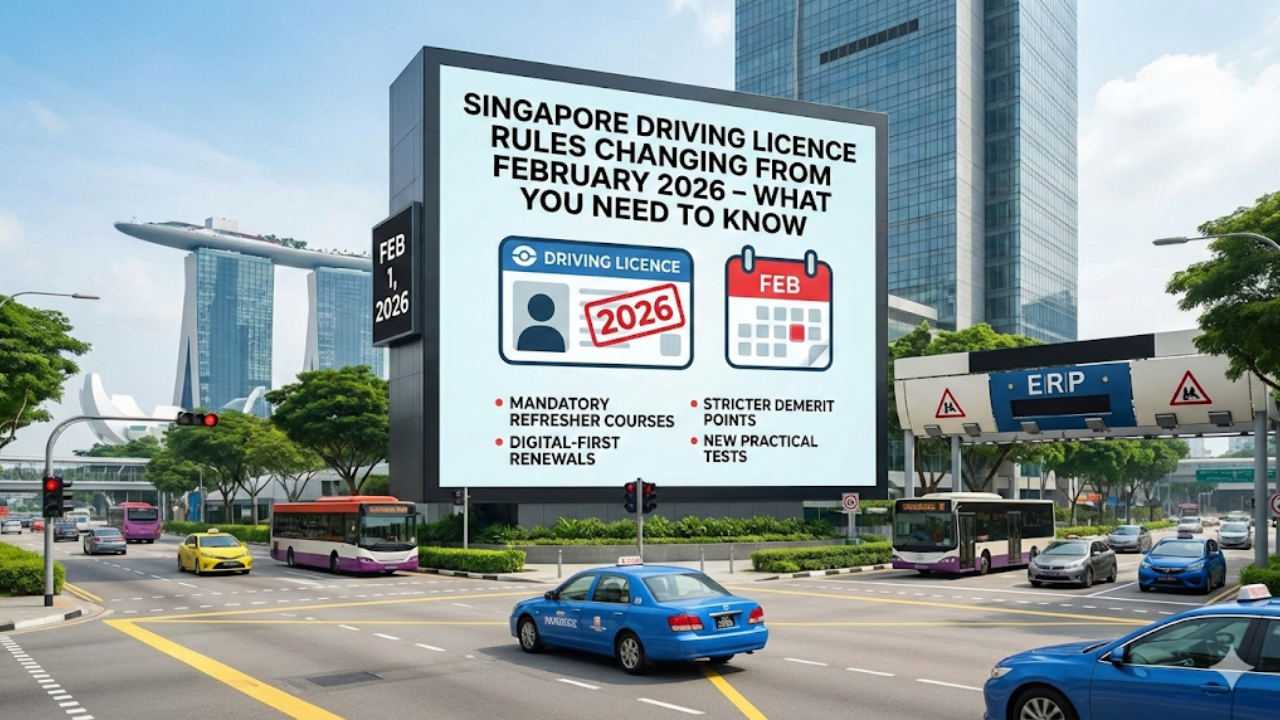

Singapore’s roads have always been among the safest in the world, but rising incidents of speeding and other violations prompted authorities to roll out significant updates to driving licence rules starting February 2026. The Ministry of Home Affairs and Traffic Police are leading this shift with a zero-tolerance approach to enhance road safety. These changes target reckless driving, senior driver assessments, and vehicle technology, aiming to cut down fatalities and make streets safer for everyone.
Tougher Penalties for Speeding
Speeding fines have jumped sharply, with composition fines now reaching up to $200 for minor excesses of 20 km/h over the limit, accompanied by 6 demerit points instead of the previous 4. For severe cases exceeding 40 km/h, drivers face court prosecution rather than fines, potentially leading to jail time and immediate licence suspension. This move ends the “pay-and-go” option for dangerous speeding, pushing drivers to rethink their habits on busy expressways and urban roads.
Friendly Streets Enforcement
New “Friendly Streets” rules protect high-pedestrian zones near schools, markets, and hawker centres with automatic extra penalties: $100 added fines and 2 bonus demerit points on top of standard punishments. These areas see heavy foot traffic daily, and the changes ensure motorists slow down proactively. Expect more cameras and signage to flag these zones, making compliance straightforward for careful drivers.
Streamlined Medical Checks for Seniors
From February 2, 2026, a Harmonised Medical Examination Report (HMER) simplifies assessments for drivers aged 65 and above, especially those holding vocational licences like taxi or private-hire vehicle operators. Previously, they dealt with duplicate exams from Traffic Police and Land Transport Authority; now, clinics send results digitally in one go, with a single annual notification. This cuts red tape while ensuring fitness-to-drive standards remain rigorous, benefiting both personal and commercial drivers.
Heavy Vehicle Speed Limits
Lorries with a maximum laden weight between 5,001 kg and 12,000 kg must now fit speed limiters capping them at 60 km/h, with fines for non-compliant owners soaring to $10,000 from $1,000. Logistics firms face stricter inspections to prevent overload-related accidents on highways. This targets commercial fleets responsible for a chunk of heavy crashes, promoting safer goods transport across the island.
Updated Penalty Overview
Here’s a quick look at key changes for light vehicles under the 2026 rules:
| Offence Type | New Fine (Composition) | New Demerit Points |
|---|---|---|
| Speeding ≤ 20 km/h | $200 | 6 Points |
| Speeding 31–40 km/h | $400 | 12 Points |
| Friendly Street Violation | +$100 | +2 Points |
| Speeding > 40 km/h | Court Prosecution | 18+ Points |
Reaching 24 demerit points triggers a 12-week licence suspension for first-timers, while probationary drivers lose theirs at just 13 points.
Licence Suspension Triggers
Demerit thresholds tighten overall: accumulating points faster means quicker revocations, with repeat offenders facing longer bans. Vocational drivers must stay vigilant, as combined personal and work licences now share the same pool under HMER. Authorities urge renewal applications via the Singapore Police Force portal to avoid lapses amid these shifts.
Preparing for Compliance
Drivers should check vehicle speed governors if applicable, book medicals early through approved clinics, and watch for new road signs. Apps from Traffic Police will soon notify users of demerit balances in real-time. Staying informed prevents nasty surprises, keeping Singapore’s roads a model of discipline.
FAQs
When do the HMER changes start?
February 2, 2026, for seniors 65+.
What happens for extreme speeding?
Court, possible jail, and instant suspension.
Do personal drivers need HMER?
Yes, it streamlines checks for all over 65.
Disclaimer
The content is intended for informational purposes only. You can check the official sources; our aim is to provide accurate information to all users.
